
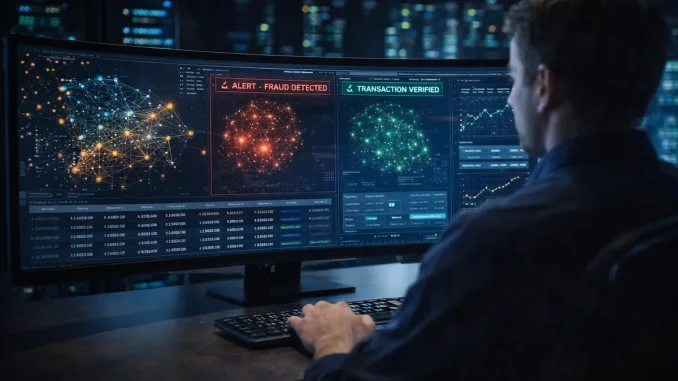
Artificial Intelligence has moved from the realm of science fiction to the engine room of the global economy. In 2026, it is the invisible hand that approves loans, detects fraud, and executes trades in milliseconds.
For decades, finance was driven by human intuition and historical spreadsheets. Today, it is driven by Machine Learning models that digest petabytes of data to predict the future. While this shift promises unprecedented efficiency and personalization, it also introduces systemic risks that are difficult to detect until it is too late.
Building on our exploration of reshaped banking, this guide dives deep into the “Brain” of modern Fintech. We will analyze how AI is creating massive value through automation and fraud prevention, while frankly discussing the ethical dangers of “Black Box” algorithms and inherent bias.
The Power of Pattern Recognition: Fraud Detection
The single most valuable contribution of AI to finance is security. Traditional fraud detection relied on static rules (e.g., “flag transactions over $10,000”). AI, however, learns your specific behavior.
In 2026, neural networks analyze thousands of data points—from your location to the angle at which you hold your phone—to verify your identity. If a transaction deviates even slightly from your digital fingerprint, AI freezes it instantly.
🛡️ Success Metric:
Banks using advanced AI fraud detection have reduced false positives by 60% and actual fraud losses by nearly 80% compared to legacy systems. This efficiency saves the global economy billions annually.
Algorithmic Trading: The Need for Speed
On stock exchanges, humans are no longer the primary players. High-Frequency Trading (HFT) algorithms execute millions of orders in the time it takes you to blink. These bots analyze news feeds, social media sentiment, and market data to spot inefficiencies.
While this provides market liquidity, it creates the risk of “Flash Crashes”—where algorithms react to each other in a feedback loop, causing prices to plummet in seconds without any fundamental reason.
The “Black Box” Problem and Bias
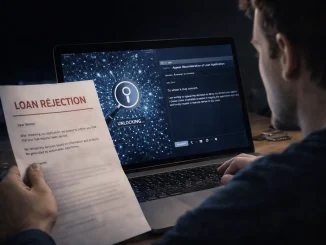
The greatest risk in financial AI is the “Black Box” Paradox. Deep learning models are often so complex that even their creators cannot explain why the AI made a specific decision. This is critical in lending.
⚠️ The Danger of Algorithmic Bias
If an AI is trained on historical data from a biased banking system, it will learn to be biased. For example, an algorithm might systematically deny loans to specific zip codes or demographics, not because of current financial risk, but because of historical patterns of exclusion. This “digital redlining” is a major regulatory battleground in 2026.
Robo-Advisors vs. Human Insight
AI has democratized wealth management through Robo-Advisors. These platforms build diversified portfolios for a fraction of the cost of a human advisor. But can a robot replace human empathy?
| Feature | AI Robo-Advisor 🤖 | Human Advisor 🧑💼 |
|---|---|---|
| Cost | Low (0.25% fee) | High (1.00% fee) |
| Availability | 24/7 Instant Access | Office Hours / Appointments |
| Emotional IQ | None (Pure Logic) | High (Understands fear/goals) |
| Ideal For | Portfolio Maintenance | Complex Life Planning |
Final Thoughts: A Tool, Not a Master
Artificial Intelligence offers immense opportunities to make finance faster, cheaper, and safer. However, it requires rigorous oversight. We must ensure that we are using AI to augment human decision-making, not to absolve us of responsibility. The future of finance belongs to “Centaur” models—where human judgment guides AI processing power.
As we look deeper into the horizon, we must ask: where does all this innovation lead? In the final article of our Fintech & Future series, we will synthesize these trends to predict what the future holds for financial innovation in the next decade.
Frequently Asked Questions (FAQ)
Will AI replace my financial advisor?
Partially. AI will likely replace the “math” part of their job (asset allocation, rebalancing). However, the “counseling” part (calming you down during a crash, planning for a child’s wedding) requires human empathy that AI cannot yet replicate.
Is AI trading safe for individual investors?
Using AI-driven tools (like Robo-advisors) is generally safe and efficient. However, trying to build your own trading bot or buying “black box” trading signals from the internet is extremely risky and often leads to significant losses.
Can AI improve my credit score?
Yes. New “Alternative Data” AI models can look at your rental history, utility payments, and even cash flow patterns to generate a credit score, helping people who might be “invisible” to traditional credit bureaus get approved for loans.


Be the first to comment