

Fintech is no longer a “disruptor” knocking on the door; it is the architect of the new house. The days of waiting three days for a wire transfer or queuing at a branch are rapidly becoming relics of a bygone era.
For centuries, the global financial system was a fortress—centralized, slow, and exclusive. Today, Financial Technology (Fintech) has dismantled those walls, democratizing access to capital and increasing the velocity of money. From mobile wallets in developing nations to algorithmic trading in major hubs, technology is rewriting the rules of value exchange.
In our previous category, we explored how the traditional banking system works. Now, we turn the page to see how that system is being upgraded, unbundled, and optimized. In this guide, we will analyze the core pillars of the Fintech revolution: financial inclusion, operational efficiency, and the shift of power from institutions to individuals.
The Democratization of Access
Perhaps the most profound impact of Fintech is Financial Inclusion. According to global data, billions of “unbanked” individuals have leapfrogged traditional banking entirely, moving straight to mobile finance. Fintech platforms leverage alternative data (like utility payments or mobile usage) to offer credit to those whom legacy banks deemed “unscoreable.”
📊 The Unbanked Revolution:
In 2026, a farmer in a remote village can now access micro-loans, insurance, and global markets via a smartphone, bypassing the need for a physical bank branch that might be hundreds of miles away.
Unbundling the Bank
Traditional banks used to be “one-stop shops” for checking, loans, investing, and insurance. Fintech has “unbundled” these services. Specialized startups now focus on doing one thing exceptionally well—whether it’s cross-border payments, peer-to-peer lending, or automated investing.
This forces traditional banks to compete on quality and price for every single service, rather than relying on customer inertia. The result is a more competitive ecosystem where the consumer wins.
| Feature | Legacy Banking 🏛️ | Modern Fintech 📱 |
|---|---|---|
| Structure | Heavy Infrastructure (Branches) | Cloud-Native (Apps/APIs) |
| Speed | Days (Batch Processing) | Seconds (Real-Time) |
| Cost | High Fees (Overhead) | Low/Zero Fees (Efficiency) |
| Focus | Product-Centric | User-Experience (UX) Centric |
Efficiency and Cross-Border Friction
Historically, sending money internationally was expensive and opaque. Fintech solutions utilizing blockchain rails and optimized liquidity pools have slashed these costs. What used to cost $50 and take a week now costs pennies and settles instantly.
⚠️ Warning: The Security Trade-off
While Fintech offers speed, it introduces new risks. Digital-only platforms can be targets for sophisticated cyber-attacks. As a user, enabling Two-Factor Authentication (2FA) and biometric security is no longer optional; it is mandatory defense.
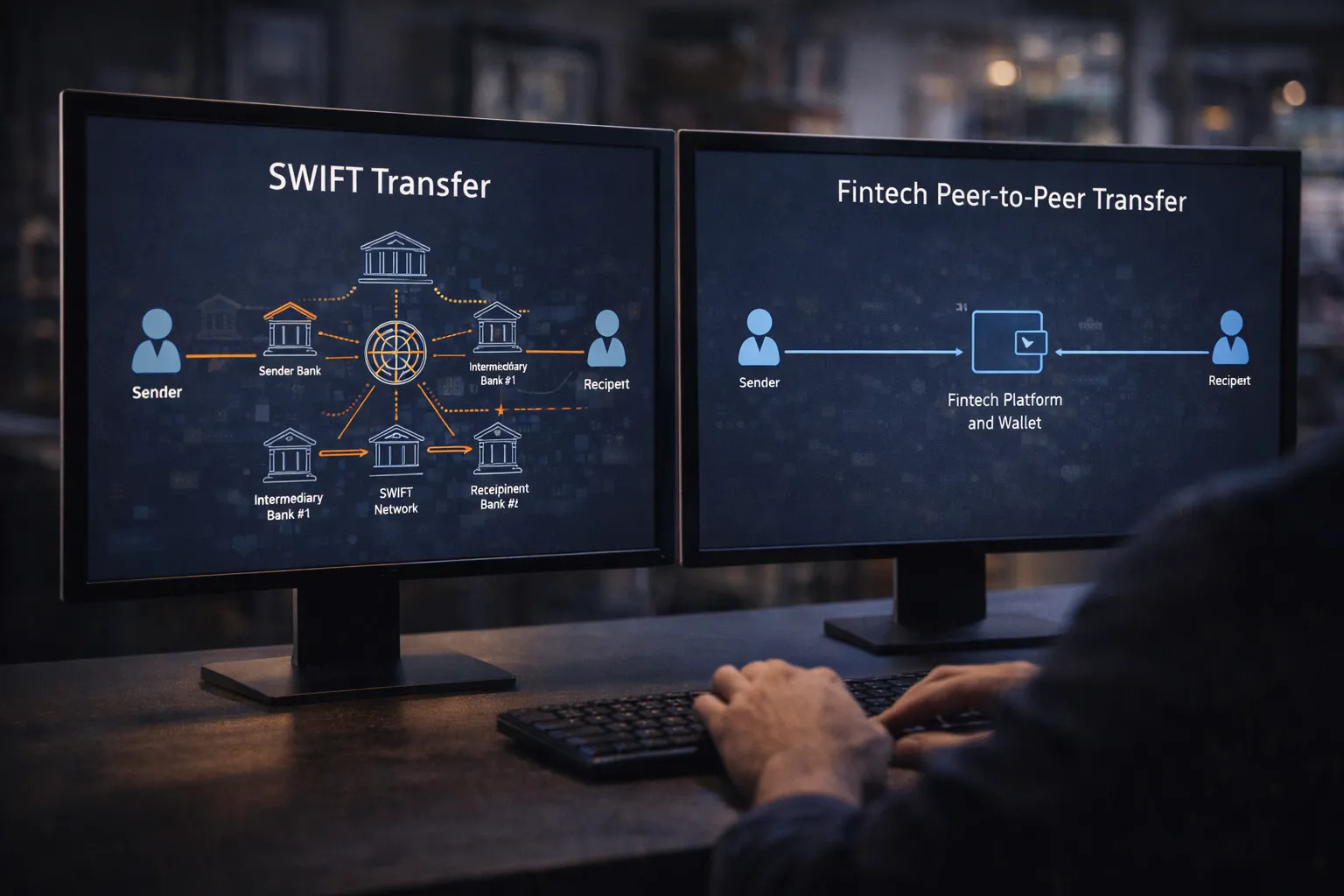
Final Thoughts: Adaptation or Obsolescence
Fintech is not a temporary trend; it is the digitization of the global economy. Traditional institutions that fail to adapt are partnering with or buying Fintech startups to survive. For the consumer, this means better tools, lower costs, and more control over financial destiny.
As the system changes, the physical form of money is changing with it. In our next article, we will explore the inevitable decline of paper currency as we discuss the future of digital payments and cashless economies.
Frequently Asked Questions (FAQ)
Is Fintech safer than traditional banks?
It depends. Traditional banks have government insurance (like FDIC) and physical branches. Most reputable Fintechs partner with these banks to offer the same insurance. However, holding money in unregulated “wallets” carries higher risk. Always check if a Fintech app is “Insured” or just a “Technology Provider.”
Will traditional banks disappear?
Unlikely. They will evolve. Instead of disappearing, they are becoming the “backend” utility providers (holding the deposits and licenses), while Fintech companies become the “frontend” user interface that customers interact with.
How does Fintech affect my credit score?
Fintech is actually helping improve credit scores. New “Credit Builder” apps allow users to report rent and utility payments to bureaus—data points that traditional banks ignored. This helps people build credit history faster and more fairly.




Be the first to comment