
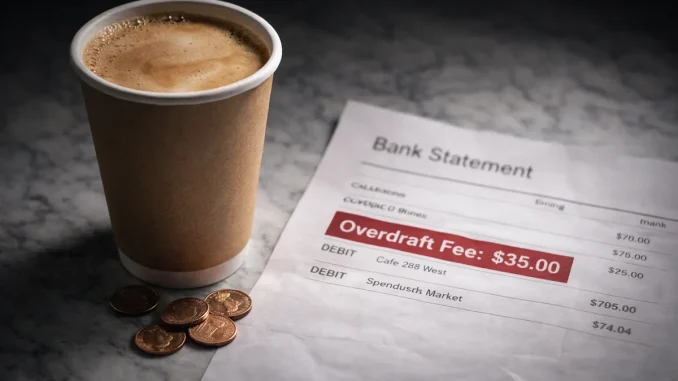
It is a scenario millions of people face: You are at the checkout, you swipe your card for a $5 purchase, and it is approved—even though you only had $2 in your account. You think the bank did you a favor. Then you check your app and see a $35 “Overdraft Fee.”
In 2026, overdraft fees remain a multi-billion dollar revenue stream for traditional banks. They brand it as “Overdraft Protection,” implying they are shielding you from the embarrassment of a declined card. In reality, they are providing a high-interest, short-term loan without your conscious consent.
Following our credit report audit strategy, we now turn to cash flow protection. This guide explains the legal difference between “Opting-In” and “Opting-Out,” the math behind the fees, and the specific steps to force your bank to simply decline your card instead of charging you a penalty.
The Regulation E Shield
In the US, a federal rule known as Regulation E changed the game. By law, banks cannot charge you overdraft fees for ATM and everyday debit card transactions unless you explicitly opted-in to the service.
If you opened your account years ago, you might have signed a document “opting-in” without realizing it. The good news? You can change your mind at any time. By opting out, your card will simply be declined at the register if you don’t have enough funds. No embarrassment is worth $35.
⚠️ The “Ghost” Fee:
Be aware that opting out of “Overdraft Protection” for debit cards does not always cover checks or automatic ACH payments (like rent or utilities). If those bounce, the bank may still charge an “NSF” (Non-Sufficient Funds) fee. You must manage these fixed costs separately.
How to Execute the “Opt-Out” Move
Banks make it difficult to find the opt-out button because it costs them money. Follow this tactical sequence:
- Check Your Status: Look at your last bank statement. If you see an “Overdraft Coverage” or “Protection” line, you are likely opted-in.
- The Digital Toggle: Most modern banking apps have a “Security” or “Account Preferences” section. Look for “Overdraft Settings” and switch it to Declined.
- The Phone Call: If you can’t find it online, call the bank and say: “I want to remove my consent for overdraft coverage for all debit and ATM transactions under Regulation E.” Use that specific legal phrasing; it alerts the representative that you know your rights.
| Scenario | Opted-In (Protection) ❌ | Opted-Out (Decline) ✅ |
|---|---|---|
| $10 Purchase with $5 Balance | Transaction Approved | Transaction Declined |
| Bank Fee | ~$35.00 | $0.00 |
| Effect on Credit Score | None (Unless unpaid) | None |
| Best For | Emergency only | Everyone |
Alternative: The “Overdraft Buffer”
If you are truly worried about emergencies, many Neobanks (like Chime, SoFi, or Ally) offer a “No-Fee Overdraft” up to a certain limit (e.g., $50 to $200). Instead of charging you, they simply allow you to go negative and pay it back with your next deposit. This is a much safer alternative to the predatory $35-per-transaction model of big banks.
Final Thoughts: Take Control of the Switch
Overdraft fees are a tax on the unobservant. By taking five minutes to opt-out of “protection,” you insulate your budget from expensive surprises. Your bank account should be a tool that serves you, not a trap that penalizes you for a simple math error. Clean up your fees today, and your future self will thank you.
Managing your cash flow is one part of the equation; managing your debt is the other. Next, we analyze a major decision for those carrying high balances in debt consolidation math: when to use a personal loan vs. balance transfer card.
Frequently Asked Questions (FAQ)
Can I get an overdraft fee refunded?
Yes, often. If it is your first time, call the bank and politely ask for a courtesy waiver. Banks will often refund one or two fees per year to keep a customer happy. Use the phrase: “I’ve been a loyal customer and would appreciate a one-time refund of this fee.”
What is the difference between NSF and Overdraft?
Overdraft means the bank paid the item and you owe them the money + a fee. NSF (Non-Sufficient Funds) means the bank rejected the item (like a check), and you still get charged a fee for the rejection. Reg E mostly protects you from the former on debit cards.
Will opting out affect my recurring bills?
It might. If you have your gym membership or Netflix set to pull from your debit card, those will be declined if you have no money. If they pull via ACH (Account/Routing number), they may still go through and trigger a fee. Always check your autopay settings.




Be the first to comment