
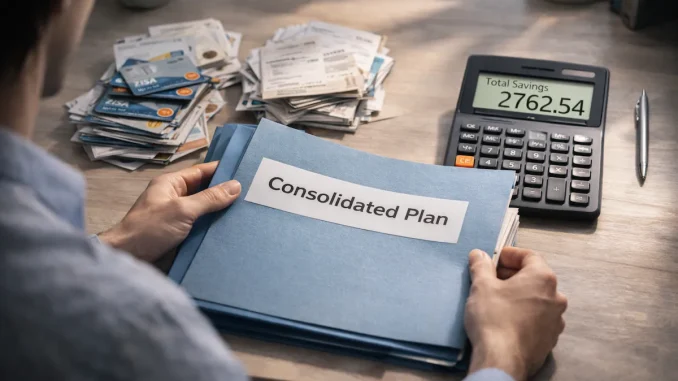
Debt is a weight, but high-interest debt is a trap. When you are paying 24% APR on three different credit cards, you aren’t just paying back what you borrowed; you are funding the bank’s record profits while your own net worth stagnates.
In 2026, debt consolidation is more than just a convenience—it is a survival strategy. However, the market is flooded with two very different solutions: the 0% APR Balance Transfer Card and the Fixed-Rate Personal Loan. Choosing the wrong one can cost you thousands in hidden fees or lead you right back into the debt cycle.
Building on our strategy to eliminate bank fees, this guide breaks down the cold, hard math of consolidation. We will analyze the “Transfer Fee Trap,” the impact on your credit utilization, and the exact “Break-Even Point” that determines which tool will save you the most money.
The Contenders: Speed vs. Stability
To win at the consolidation game, you must match the tool to the size of your “fire.”
1. The Balance Transfer Card (The Sprint)
These cards offer an introductory 0% APR for 12 to 21 months.
The Strategy: This is best for smaller amounts of debt ($2,000 – $7,000) that you are 100% certain you can pay off before the 0% window closes.
The Math: Most cards charge a 3% to 5% “Transfer Fee.” If you move $5,000, you pay $250 upfront. If you don’t finish the balance in time, the rate often jumps to 20%+, effectively erasing your progress.
2. The Personal Loan (The Marathon)
This is an installment loan with a fixed interest rate (usually 8% – 15% for good credit) and a fixed term (3 to 5 years).
The Strategy: Best for large, multi-year debt loads ($10,000+). It provides a predictable “light at the end of the tunnel.”
The Math: While the interest rate is higher than 0%, there is no ticking clock that resets to 20%. It forces a disciplined repayment schedule.
The Credit Score Hack: Revolving vs. Installment
This is the “Pro” detail most people miss. Your credit score loves Installment Loans more than Revolving Debt.
When you move credit card debt (revolving) to a Personal Loan (installment), your “Credit Utilization Ratio” instantly drops to near 0%. This can cause a sudden, massive spike in your credit score—often 30 to 50 points—because you have cleared your “limit-to-balance” ratio on your cards.
⚖️ The Decision Formula:
If your debt is less than 20% of your annual income and you can pay it in 18 months, go with the Card.
If your debt is more than 25% of your income or will take 3+ years to pay, go with the Loan.
| Metric | Balance Transfer Card 💳 | Personal Loan 🏦 |
|---|---|---|
| Interest Rate | 0% (Intro Period) | 8% – 18% (Fixed) |
| Upfront Fees | 3% – 5% Transfer Fee | 1% – 6% Origination Fee |
| Max Amount | Lower (based on credit limit) | Higher (up to $50,000+) |
| Monthly Payment | Variable (Minimums) | Fixed (Predictable) |
Final Thoughts: Don’t Dig a New Hole
The biggest danger of debt consolidation isn’t the math; it’s the behavior. If you consolidate your cards into a loan and then start spending on those empty cards again, you have effectively doubled your debt. Consolidation only works if you address the root cause of the spending. Treat your new loan or card as a “One-Way Street” toward freedom.
With our banking and credit foundation now firmly repaired, we shift our focus to wealth building. Next, we move into the Investing Strategies series with building a passive income ‘snowball’ with dividend aristocrats in 2026.
Frequently Asked Questions (FAQ)
Will consolidating my debt hurt my credit score?
Temporarily, yes. Opening a new account (loan or card) triggers a “Hard Inquiry” and lowers your “Average Age of Accounts.” However, the long-term benefit of a lower “Credit Utilization Ratio” usually results in a much higher score within 3 to 6 months.
Can I get a consolidation loan with bad credit?
It is difficult. Most traditional lenders require a 660+ score. If your credit is poor, you may need to look at “Credit Unions” or specialized lenders, but be prepared for higher interest rates (20%+), which might make consolidation less beneficial than a debt management plan.
Should I close my old cards after consolidating?
Usually, no. Closing old accounts can hurt your score by reducing your available credit and shortening your credit history. Keep them open with a $0 balance, but hide them in a drawer so you aren’t tempted to spend.




Be the first to comment