
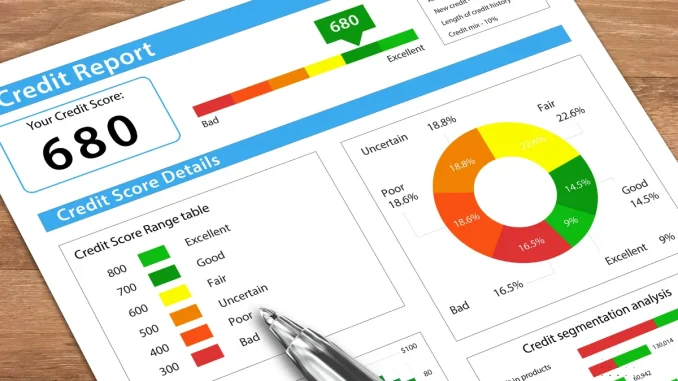
In the credit world, every point is a prisoner. While a single “Hard Inquiry” might only shave 5 to 10 points off your score, a cluster of unauthorized or “ghost” inquiries can be the difference between a 2.9% and a 4.5% mortgage rate.
Most consumers believe that once a lender pulls their credit, the record is permanent for two years. This is a myth. Under the Fair Credit Reporting Act (FCRA), lenders must have a “permissible purpose” to access your file. If an inquiry appears that you didn’t authorize—or if a car dealership “shotgunned” your application to 15 different banks without telling you—you have the legal right to fight back.
Building on our security fortress strategy, this guide focuses on offensive credit repair. We will teach you how to spot “inquiry fraud,” the exact wording to use in a dispute letter, and why timing is everything when cleaning your report in 2026.
The Audit: Hard vs. Soft Inquiries
First, don’t panic over every name you see on your report.
- Soft Inquiries: These occur when you check your own score or when a bank screens you for a “pre-approved” offer. These do not affect your score and are invisible to lenders.
- Hard Inquiries: These happen when you apply for credit (loan, card, mortgage). These do stay on your report for 24 months and impact your score for 12 months.
Tactical Move: Identifying the “Shotgun” Effect
One of the most common “incorrect” inquiries happens at car dealerships. You give them permission to find you a loan, and they send your data to 20 different lenders. Suddenly, your report has 20 hard inquiries. While FICO models usually group these as “one” for scoring purposes if done within a short window, they still clutter your report and look messy to future underwriters.
⚖️ The Legal Leverage:
If you did not sign a document explicitly allowing a specific lender to pull your credit, that inquiry is unauthorized. You can dispute it as “No Permissible Purpose.”
How to File a Strategic Dispute
Don’t just click the “Dispute” button on a credit monitoring app. For the best results, follow this three-step tactical process:
1. Contact the Creditor First
Call the company that made the inquiry. Ask them to provide proof of your authorization (a signature or digital timestamp). If they can’t find it, demand they send a “Deletion Letter” to the credit bureaus. This is often faster than going through the bureaus directly.
2. The Formal Bureau Letter
If the creditor refuses, write a formal letter to Experian, Equifax, and TransUnion. State clearly: “I have no record of an account or an application with [Lender Name] on [Date]. I did not authorize this inquiry. Please provide proof of permissible purpose or remove the entry immediately.”
| Scenario | Disputable? | Success Rate |
|---|---|---|
| Unauthorized Fraud | YES | High (100% with ID Theft report) |
| Dealer “Shotgunning” | Maybe | Moderate (Focus on unauthorized lenders) |
| “I just regret applying” | NO | Zero (Bureaus will verify the signature) |
| Identity Theft | YES | Guaranteed (by law) |
Final Thoughts: Quality Over Quantity
Disputing hard inquiries is a powerful tool, but use it sparingly. If you dispute 20 legitimate inquiries at once, the bureaus may label your account as “frivolous” and stop investigating your claims entirely. Focus on the ones that are truly unauthorized or errors. Each removal is a small victory that cleans your profile for the next big move.
Cleaning your report is great, but avoiding unnecessary costs is better. Next, we look at a bank fee that catches everyone off guard in overdraft fees strategy: how to opt-out and stop paying $35 for a coffee.
Frequently Asked Questions (FAQ)
How many points will I gain if an inquiry is removed?
Generally, you can expect a gain of $2$ to $5$ points per inquiry removed. If you have many inquiries (10+), the total gain could be more significant as you move out of the “high-risk” category in the algorithm’s eyes.
What if the bureau says the inquiry is “verified”?
If they verify it but you still believe it’s wrong, you can ask for the “Method of Verification.” By law, they must tell you who they spoke to and what evidence they used. This often reveals that the lender simply checked a box without actually looking at your file.
Does a dispute stay on my report?
While an inquiry is being investigated, a “Consumer Dispute” notation may appear. This is temporary and usually does not affect your score, but some mortgage underwriters may ask you to resolve the dispute before they finalize your loan.




Be the first to comment