
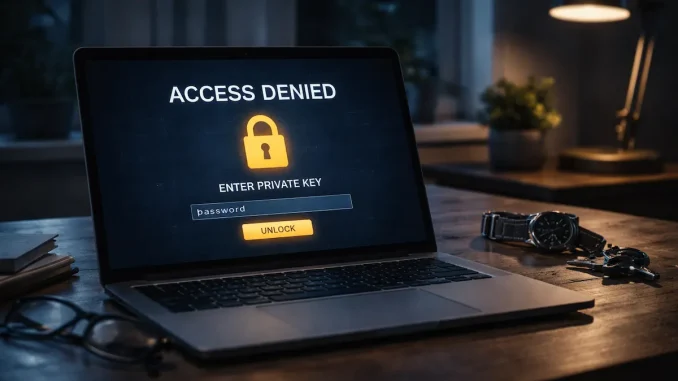
It is the ultimate nightmare of the digital age: You spend a lifetime building wealth in cryptocurrency and digital assets, only for it to be locked away in a digital vault forever because no one knows the password.
Unlike a bank account, where a death certificate allows your heirs to claim funds, decentralized finance (DeFi) has no customer support hotline. There is no “Forgot Password” button on the blockchain. If you die without a clear technical and legal plan, your Bitcoin doesn’t go to the government or your family—it effectively burns, becoming inaccessible mathematics for eternity.
In this guide, part of our future of finance series, we confront the reality of “Digital Death.” We will explain the legal chaos of dying “intestate” (without a will) in the Web3 era, the difference between legal ownership and technical access, and how to set up a “Dead Man’s Switch” to protect your legacy.
The “Black Hole” Problem: Intestacy and Crypto
When you die without a will (intestate), the state determines who gets your assets based on a rigid hierarchy (spouse, children, parents). However, the law cannot hack encryption.
Even if a judge awards your cryptocurrency portfolio to your daughter, that court order is useless if the assets are in a hardware wallet (like Ledger or Trezor) and she doesn’t have the 24-word seed phrase. Millions of dollars in crypto are estimated to be lost annually due to owner mortality without access planning.
The Security Paradox: Where to Put the Keys?
The biggest mistake crypto holders make is putting their private keys directly in their Last Will and Testament.
⚠️ Critical Warning: Wills Become Public Record
Once a will goes to probate court, it becomes a public document. Anyone can read it. If you write your 12-word recovery phrase in your will, you have just broadcasted the keys to your fortune to every hacker and thief in the world. Never write private keys in a will.
The Solution: A Tiered Access System
To secure your digital legacy, you need a system that separates knowledge from access until the right time.
1. The “Dead Man’s Switch” (Technical)
This is an automated trigger. For example, Google’s “Inactive Account Manager” can send access to your email (where password resets live) to a trusted person if you don’t log in for 3 months. More advanced crypto-native solutions involve smart contracts that automatically transfer funds to a beneficiary wallet if the owner’s wallet is inactive for a set period.
2. The “Letter of Instruction” (Non-Legal)
This is a separate, private document referenced in your will but not part of the public will. It guides your executor on:
- Where to find the hardware wallet.
- Where to find the “Seed Phrase” (e.g., “In the safety deposit box at Chase Bank”).
- Which exchanges you use (Coinbase, Binance) and 2FA device locations.
| Method | Security Level 🔒 | Risk Factor ⚠️ |
|---|---|---|
| Keys in Will | Zero | Extreme: Public exposure of funds. |
| Paper in Safe | High | Physical: Fire, flood, or theft. |
| Shamir’s Secret Sharing | Ultra-High | Complexity: Heirs may not know how to reassemble the key parts. |
| Custodial Service (Casa/Unchained) | High | Cost: Monthly fees for multi-sig inheritance. |
Final Thoughts: Don’t Be the Single Point of Failure
Your digital wealth is only as secure as your succession plan. If you hold significant assets in crypto, you are your own bank. That means you must also be your own vault manager and estate planner. Consult a lawyer who understands “Digital Assets” specifically—a general estate lawyer may not understand the difference between a public key and a private key.
While digital wallets are personal, other fintech tools impact the planet. Next, we explore the ethical side of finance in how to spot ‘greenwashing’ in fintech apps that claim to be sustainable.
Frequently Asked Questions (FAQ)
Can Coinbase or Binance help my family access my account?
Yes, but it is slow. Centralized exchanges (CEX) function like banks. Your heirs will need a death certificate, a court order (Letter of Testamentary), and patience. The process can take months, but the funds are generally recoverable.
What happens to my NFTs?
NFTs are stored in wallets just like crypto. Without the private key, the NFT remains on the blockchain forever, owned by “nobody.” It cannot be transferred, sold, or displayed in a new gallery.
Is a safety deposit box a good place for seed phrases?
Generally, yes. However, ensure your executor has legal access to the box. In some jurisdictions, banks seal safety deposit boxes upon death until a probate court order is issued, which can cause delays.


Be the first to comment