
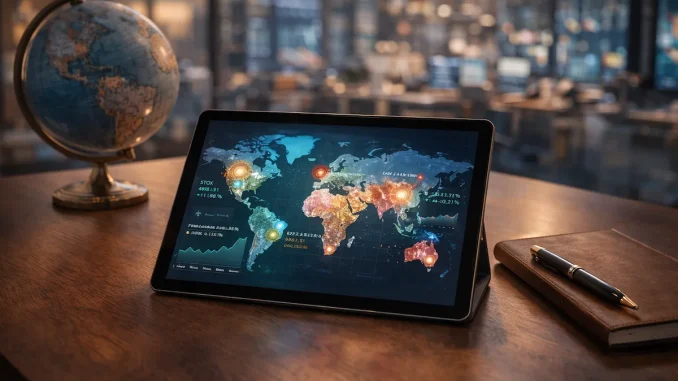
Diversification is the only “free lunch” in investing. It is the art of spreading your eggs across different baskets to ensure that a single localized crisis doesn’t shatter your entire financial future.
In the interconnected markets of 2026, diversification has moved beyond simply owning different stocks. It now requires a “borderless” mindset, balancing exposure across various currencies, geopolitical zones, and asset classes. As we analyzed in our discussion on risk tolerance, your comfort level determines how far you venture into foreign markets, but a global perspective is essential for every resilient portfolio.
A well-diversified global strategy acts as a shock absorber. When one economy faces a downturn, another might be entering a growth phase. In this guide, we will explore advanced techniques for geographic and sectoral diversification, the role of alternative assets, and how to maintain balance in a volatile global landscape.
The Multi-Asset Class Framework
True diversification starts with Asset Allocation. Instead of concentrating solely on equities, a global investor in 2026 balances their portfolio across multiple classes that respond differently to economic cycles.
The goal is to include assets with low Correlation. For instance, when traditional stocks are volatile due to rising interest rates, physical commodities like gold or essential infrastructure REITs often act as a hedge, preserving the portfolio’s total value.
Geographic Diversification: Beyond Home Bias
Many investors suffer from “Home Bias”—the tendency to invest only in their own country’s market. While familiar, this exposes you to significant country-specific risk. A 2026 global strategy should ideally be divided into three geographic tiers:
- Developed Markets (US, EU, Japan): These provide stability, liquidity, and exposure to established global giants.
- Emerging Markets (India, Southeast Asia, Brazil): These offer higher growth potential but come with increased political and currency risk.
- Frontier Markets: Small, developing economies that provide high upside but require extreme patience and risk capacity.
🌍 The Currency Hedge Factor
Investing globally also means investing in different currencies. If your home currency devalues, your foreign-denominated assets (like US Dollar or Euro-based stocks) can actually increase in value for you, acting as a natural protector of your purchasing power.
Sectoral Diversification in the Age of Technology
Even within a single market, you must diversify across sectors. Relying too heavily on a single industry—such as Technology—can be disastrous during a sector-specific correction. A balanced portfolio includes a mix of Cyclical sectors (Consumer Discretionary, Financials) and Defensive sectors (Healthcare, Utilities).
| Sector Type | Market Behavior | 2026 Role |
|---|---|---|
| Tech & AI | Aggressive Growth | Capital appreciation and innovation exposure. |
| Energy & Raw Materials | Inflation Sensitive | Hedging against rising costs of living. |
| Consumer Staples | Defensive | Stability during economic recessions. |
| Alternative Assets | Low Correlation | Private equity, timber, or carbon credits. |
⚠️ Warning: Over-Diversification
There is a point where adding more assets doesn’t reduce risk but does reduce returns. This is called “Diworsification.” Aim for a portfolio of 15-30 high-quality holdings or 3-5 broad-market ETFs to reach the “sweet spot” of risk reduction.
Final Thoughts: Balance is a Process
Global diversification is not a one-time setup; it is a process of constant rebalancing. As different regions grow at different speeds, your portfolio will naturally tilt. Periodically selling your winners and buying into undervalued sectors ensures you maintain the risk profile you established in your financial plan.
Mastering global assets is the key to longevity. But what makes these strategies work over decades rather than just months? In our next article, we will look deeper into the principles of endurance: what makes an investment strategy sustainable over time?
Frequently Asked Questions (FAQ)
Is it expensive to invest globally?
Not in 2026. Thanks to broad-market ETFs (Exchange-Traded Funds), you can own thousands of companies across 50+ countries with a single purchase. These funds have very low expense ratios, making global diversification accessible even for small investors.
How much of my portfolio should be in foreign markets?
A common rule of thumb is the 70/30 split: 70% in your home or primary market (like the US) and 30% in international markets. However, for investors in smaller economies, increasing international exposure to 50% or more is often recommended to reduce currency risk.
Do I need to worry about foreign taxes?
Yes. Many countries have withholding taxes on dividends. However, most modern economies have “Double Taxation Treaties” that allow you to claim a tax credit in your home country for taxes paid abroad. Always consult with a tax professional regarding your specific jurisdiction.



Be the first to comment