

Financial stability is not about how much you earn; it is about how much you keep and how well you can withstand an unexpected economic storm. In an era of shifting global markets and unpredictable inflation, stability has become the ultimate luxury.
The global economy in 2026 presents a unique paradox. While technology provides more tools than ever to manage money, the sheer complexity of market volatility, geopolitical shifts, and changing interest rates can make the path to security feel like a minefield. True financial stability is no longer a passive state of “having enough”—it is an active strategy designed to thrive under pressure.
As we have seen in our previous series on how the banking system works, the institutions around us are constantly managing risk. To achieve stability, you must adopt the same mindset. It requires moving beyond simple saving and into the realm of strategic capital allocation and resilience engineering.
In this comprehensive guide, we will break down the pillars of financial stability in an uncertain world. We will explore how to build a liquid moat around your life, how to “inflation-proof” your future, and why your mindset is the most valuable asset you own.
The Five Pillars of a Recession-Proof Financial Foundation
Building stability when the future is unclear requires a multi-layered approach. You cannot rely on a single income stream or a static savings account. Instead, you must build what financial experts call “Anti-Fragility.”
Liquidity Management: The Art of the “Cash Moat”
In an uncertain economy, liquidity is your greatest weapon. While investing is crucial for growth, having accessible cash allows you to avoid selling assets at a loss during a market downturn. Aiming for a tiered liquidity strategy is the gold standard for 2026:
- Immediate Tier: 1 month of expenses in a high-yield checking account.
- Secondary Tier: 3-6 months of expenses in a dedicated Emergency Fund (which we will cover in-depth in our upcoming guide on emergency funds).
- Opportunity Tier: Liquid cash reserved specifically for buying undervalued assets when the market overreacts.
📊 Market Insight 2026: With interest rates remaining volatile, “Cash is no longer trash.” High-yield savings accounts and short-term government bonds are currently offering some of the best risk-adjusted returns for your liquidity moat.
Strategic Debt De-Leveraging
Uncertainty and debt are a dangerous combination. When the economy shifts, debt acts as an anchor that can pull even the most successful individuals underwater. Stability requires a shift from “using credit” to “owning your capital.”
The Stability Stress-Test
Ask yourself: “If my primary income stopped for 90 days, could I still service my debt without touching my retirement accounts?” If the answer is no, your priority must be aggressive de-leveraging. Focus on variable-rate debts first, as these are the most sensitive to the “economic noise” we discussed in our article on interest rate influences.
Diversified Income Streams: Beyond the 9-to-5
In 2026, relying on a single employer is one of the highest risks you can take. Financial stability is bolstered by Income Diversification. This doesn’t mean you need five jobs; it means you need different types of income.
| Income Type | Stability Role | 2026 Examples |
|---|---|---|
| Active Income | Primary wealth generator. | Salary, Professional fees, Consulting. |
| Passive Income | Inflation protection and backup. | Dividends, REITs, Rental income. |
| Portfolio Income | Long-term compounding. | Capital gains from stocks or crypto-assets. |
| Resilient Income | Crisis-proof cash flow. | Side-hustles in essential services or digital products. |
Protecting Purchasing Power Against Inflation
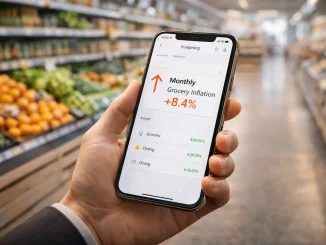
Stability isn’t just about having money; it’s about what that money can buy. Persistent inflation erodes the “Real Value” of your savings. To maintain stability, your portfolio must include assets that have an intrinsic link to the cost of living. This includes commodities, Treasury Inflation-Protected Securities (TIPS), and companies with massive pricing power.
⚠️ Warning: Excessive conservatism can be just as risky as over-aggressive investing. If your money is “too safe” (earning 1% while inflation is 4%), you are guaranteed to lose stability over time.
Final Thoughts: Stability is a Mindset
The path to financial stability in an uncertain economy is rarely a straight line. It is a series of adjustments, pivots, and disciplined choices. By building a liquid moat, reducing toxic debt, and diversifying how you earn, you create a fortress that can survive any market cycle.
As we move forward in this Personal Finance series, we will dive deeper into the specific tools mentioned today. Stability starts with a plan, but it survives through a budget. Join us in our next guide as we explore smart budgeting principles for long-term financial health to turn these high-level strategies into daily habits.
Frequently Asked Questions (FAQ)
What is the first step to financial stability during high inflation?
The first step is Audit and Adjust. You must track your “Real Inflation Rate”—how much your specific expenses have risen—and adjust your budget to prioritize “Needs” over “Wants.” Simultaneously, ensure your emergency fund is moved to a high-yield account to mitigate the erosion of purchasing power.
How much cash should I hold in an uncertain economy?
While the traditional rule is 3-6 months of expenses, in a highly uncertain economy (like 2026), many professionals now recommend 6-12 months of basic living expenses. This provides a longer “runway” to adapt if your primary industry faces disruption.
Is it safe to invest in the stock market when the economy is unstable?
Investing during instability is often where the most significant wealth is created, provided you use Dollar-Cost Averaging (DCA). By investing a fixed amount regularly, you buy more shares when prices are low and fewer when they are high, reducing your overall risk and avoiding the trap of trying to “time the market.”
Should I pay off my mortgage early for stability?
This depends on your interest rate. If you have a low fixed-rate mortgage (e.g., 3%), and you can earn 5% in a safe savings account, it is mathematically better to keep the cash liquid for stability. However, the psychological freedom of a paid-off home is a powerful component of stability that shouldn’t be overlooked.



Be the first to comment